3.3 latest
From the hundekraft 3.3 release.
-
reactor.knl 33.2 KB · ↓ 1
- hundekraft
File details
- Format
- hundekraft (kennel) plugin
- SHA-256
bc59a6775c9b4eee32c3916d5720f1c585dcd75c92ea712229a8381d5d42e2cd
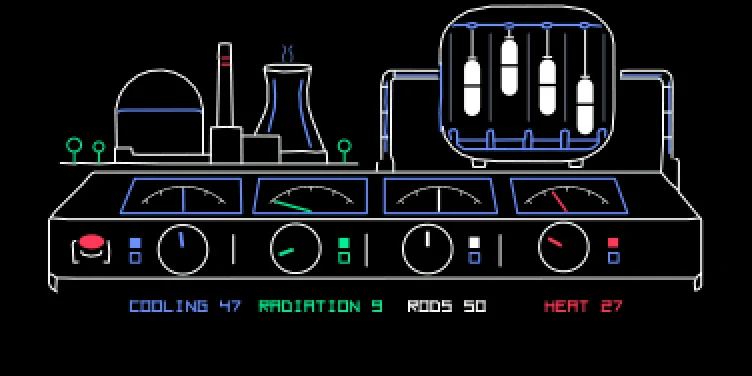
A power plant you play like a synth.
Four sine waves sit in a loop and modulate each other, like fuel rods in a core. Heat pushes the loop and cooling holds it back. While cooling keeps up you get clean FM; turn up the heat and the tone grows, bends and starts to howl. The fun is finding how close to the edge you can play.
To load it: synth then Shift + T1 pick reactor
REACTOR plays two octaves below the key you press, because that is where it sounds best: an A3 key gives an A1. Go up an octave on the keyboard if you want it higher.
The core is never quite still: the rods drift, and the closer it runs to the edge, the faster it breathes. Let the heat win and the core goes critical with a flare, and the sound overdrives into a thick, throbbing tone. Leave it there and it runs away: a growl an octave down comes up under the note, and the pitch sinks under the load. Turn cooling up or let go, and it spins back up to pitch and settles. A note held near the edge warms up over a few seconds and can tip over on its own. Every voice has its own core, so a long chord can go critical one note at a time.
The screen is the plant. The rods in the vessel rise as you pull them out. The gauge on the right is the core's temperature, and critical sits at about four fifths of its scale. While a voice is critical, the red button and the bands on the chimney blink. The steam grows taller the hotter the core runs. Near critical the whole plant starts to buzz, and once it goes critical it judders: the chimney sways, the rods jump in the vessel and the needles bounce, harder still in a runaway. Let go and it settles within about a second after the sound dies away.
| Knob | Control | Turn |
|---|---|---|
| blue | Cooling | Darkens the loop and cools the core faster. More cooling, cleaner sound |
| green | Radiation | Noise in the loop, plus Geiger clicks that speed up when the core is hot |
| white | Rods | Pulls the rods out one at a time. All in is a plain sine. Each rod out adds overtones and more fuel |
| orange | Heat | Drives the loop and the overdrive, and heats the core. Up to critical, more heat sounds brighter. Past it, thicker and darker. Hard key presses bite harder and add a little heat |
| Starting point | blue | green | white | orange | Notes |
|---|---|---|---|---|---|
| China syndromeoctave 0 | 8% | 12% | 100% | 49% | A bass with no cooling. It trips after a moment, growls an octave down and sinks. Preset: china syndrome. |
| Turbineoctave +1 | 18% | 15% | 85% | 61% | Long notes trip and dive in pitch. Short ones stay in tune. Preset: turbine. |
| Breederoctave +1 | 27% | 9% | 61% | 41% | Hold a chord: it breathes faster and trips after a few seconds. Preset: breeder. |
| Coolant leakoctave +1 | 18% | 9% | 43% | 40% | Short notes stay clean. Hold one and it tips over. Preset: coolant leak. |
| Control rodsoctave +1 | 73% | 0% | 79% | 12% | A struck bell, no sustain on T2. Preset: control rods. |
| Meltdownoctave 0 | 0% | 61% | 100% | 100% | No cooling, everything else up. Preset: meltdown. |
Each bar is a share of that encoder’s range. The encoders turn endlessly, so use it as a guide while you watch the screen. Where a preset is named, it’s in the workshop’s preset pack.
There are twelve REACTOR presets: china syndrome, turbine, breeder, ignition, coolant leak, geiger lead, half-life pad, core bass, meltdown, control rods, rod organ and scram.
From the hundekraft 3.3 release. Full manual
From the hundekraft 3.3 release.
bc59a6775c9b4eee32c3916d5720f1c585dcd75c92ea712229a8381d5d42e2cd